Skip to content
Select Page
gr flag

Study in Greece

Greece

Compare Greece's public universities, licensed non-state university entities, colleges and specialist institutions with source-led guidance for international students.

76Institutions
No current official source reviewed publishes one complete, comparable nationality count for all five provider categories. Provider marketing totals and Erasmus cohorts use different scopes and are not combined.Nationalities
Eurostat reports that foreign students represented 3.0% of Greece's tertiary students in 2023. No directly comparable current absolute international-student count was found in the reviewed national summary, so none is inferred.Intl. Students
EUR 650–1,350
Monthly Living Cost
Checked 22 August 2026: no single official Greece-wide time for every Type D student visa was verified. Appointments, jurisdiction, checks and interviews vary. Apply as early as the consulate allows; avoid irreversible travel commitments before approval.
Visa Processing Time

gr flag
About Studying in Greece

Greece's reconciled civilian catalogue contains 76 current provider identities in five distinct groups: 24 public universities, two other named specialised tertiary institutions, two higher ecclesiastical academies, 11 licensed non-state University Legal Entities and 37 licensed colleges. These groups are not legally interchangeable. Public universities are listed by Study in Greece; NPPÉ entities and colleges are separately licensed by the Ministry, and college status must not be presented as Greek public-university status. Military, police, fire-service, coast-guard and merchant-marine academies are outside this open civilian international-study scope. Recognition of a provider does not prove every programme, teaching site, professional entitlement or foreign partnership, so the exact award and current quality evidence must be checked before applying. Programmes and courses are outside this phase.
Study in Greece names the 24 public-university provider universe. The Ministry separately licenses NPPÉ University Legal Entities and colleges. HAHE accredits institutional quality systems and study programmes through internal and external review. Provider status does not automatically prove every programme, teaching site, foreign award or professional entitlement.
Capital Athens
Language Greek is the official and principal teaching language. English and other foreign-language programmes are expanding, but the exact teaching and assessment language must be checked for each study route.
Currency EUR
Academic Year The principal public-university pattern uses winter and spring semesters: teaching generally runs from October to January and late February to June, with examination periods after each semester and resits in September. Institutions set exact dates.
Intakes Autumn is the main intake. Spring starts exist for some postgraduate, branch or college routes, but there is no universal second intake. The annual foreign-candidate and programme-call dates must be checked directly.
Intl. Students Eurostat reports that foreign students represented 3.0% of Greece's tertiary students in 2023. No directly comparable current absolute international-student count was found in the reviewed national summary, so none is inferred.
Work Rights Checked 22 August 2026: current Greek migration policy and the EU Immigration Portal state that qualifying third-country students may work part-time. The exact hours, contract, tax, social-insurance and student-progress conditions must be verified for the permit held; part-time permission is not unrestricted employment. EU, EEA and Swiss citizens use free-movement rules but still follow employment and tax law. Do not rely on work income to satisfy initial immigration funding evidence.


Why Study in Greece?

Twenty-four public universities

Study in Greece names 24 public universities distributed across Athens, Thessaloniki, Crete, the mainland and the Aegean.

Growing international provision

Official 2026 outreach highlighted 13 English-taught undergraduate programmes, while the national portal reports more than 200 international study options.

European quality framework

HAHE accreditation evaluates institutional quality systems and study programmes through internal and external review.

Distinct provider choices

Public universities, licensed NPPÉ branches, licensed colleges, ecclesiastical academies and specialist institutions are identified separately.

Culture and student cities

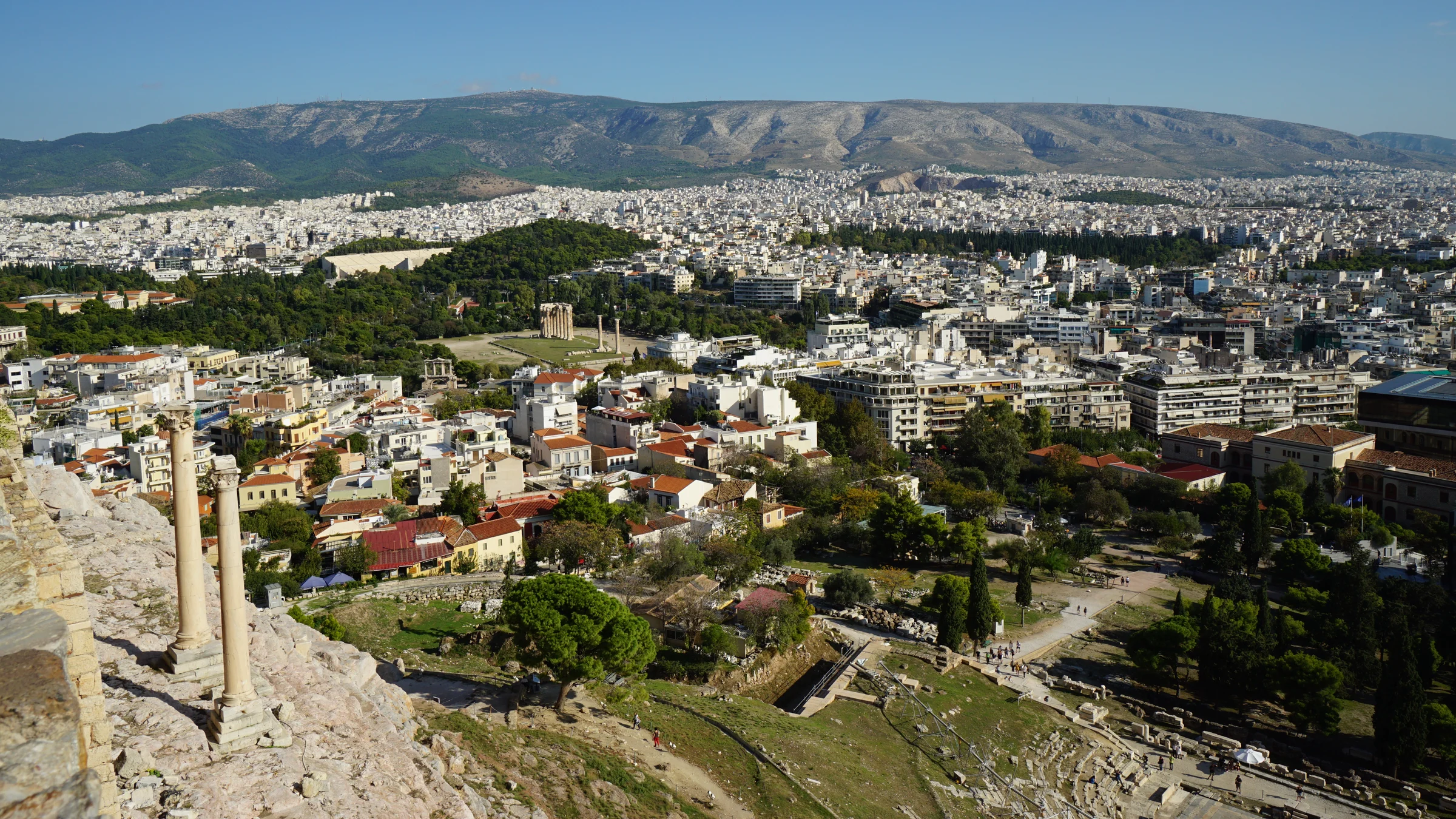
Athens, Thessaloniki, Patras, Crete and regional university centres combine study with Greece's historical, cultural and Mediterranean setting.

Study-to-work pathway

Current 2026 rules provide eligible third-country students part-time work and a one-year H.11 post-study job-search or entrepreneurship route.

🏆
Greece by the Numbers

24
Public universities on the current Study in Greece list.
743,892
Enrolled undergraduates in ELSTAT's 2023/24 tertiary-education snapshot.
93,270
Postgraduate students in the same 2023/24 ELSTAT snapshot.
3.0%
Foreign share of tertiary students in Greece in Eurostat's 2023 comparison.

💰
Cost of Living & Visa

Monthly Living Costs

Official Study in Greece guidance gives apartment rent of roughly EUR 250-600 and utilities of EUR 80-120 monthly, while the University of Crete estimates EUR 650-700 total monthly student costs in Crete. The EUR 650-1,350 structured range below is a transparent planning envelope, not a national average: housing and utilities use the official ranges; Thessaloniki transport uses current EUR 8 reduced and EUR 16 standard monthly passes; food and personal allocations are balancing planning allowances. Athens, private studios, islands and peak-demand locations can cost more.

Accommodation
EUR 250–600 / month
Utilities
EUR 80–120 / month
Food planning allowance
EUR 200–350 / month
Local transport planning benchmark
EUR 8–16 / month
Phone, study and personal allowance
EUR 112–264 / month
Estimated Monthly Total EUR 650–1,350 / month
Student Visa Guide
Visa guidance

EU, EEA and Swiss citizens do not need a student visa but must meet residence-registration conditions for longer stays. Most non-EU students need acceptance from the relevant education institution before applying for a national Type D study visa through the competent Greek embassy or consulate, then must complete the correct residence-permit process. Admission alone does not confer immigration status. Requirements vary by nationality, provider category and study route, so use the competent consulate, Ministry of Migration and host institution immediately before travel. Appointment capacity, jurisdiction, document checks and interviews vary. EU rules address residence-decision timing but do not create a guaranteed end-to-end visa timeline. External service, translation, legalisation, insurance and document-production charges may be separate.

Required document

Completed national-visa application, compliant photograph, biometrics and in-person interview where required.

Required document

Valid passport meeting the competent consulate's issuance, validity and blank-page rules.

Required document

Official acceptance or enrolment certificate for the specific study route and evidence of paid fees where required.

Required document

Proof of sufficient funds for study, living costs and return travel in the form accepted by the authority.

Required document

Criminal-record certificate and medical certificate where required for the national-visa application.

Required document

Travel medical or private health insurance covering the required risks and period.

Required document

Accommodation or address evidence and any residence-permit documents required after arrival.

Required document

Certified translations, apostille or legalisation only in the exact form required by the institution or authority.

Processing time

Checked 22 August 2026: no single official Greece-wide time for every Type D student visa was verified. Appointments, jurisdiction, checks and interviews vary. Apply as early as the consulate allows; avoid irreversible travel commitments before approval.

Visa fee

Checked 22 August 2026: current guidance lists national-visa fees of EUR 90 or EUR 180 depending on the case, plus EUR 150 per year for a study residence permit. Other service and document charges may be separate; verify the official payee.

🧭
Student Life & Practical Guidance

Health Insurance

International students must maintain valid health coverage. EU or EEA students should confirm whether the European Health Insurance Card applies and what it excludes. Non-EU students commonly need private travel and health insurance satisfying national-visa and residence conditions. Employment-linked public insurance, when applicable, does not retroactively replace entry requirements. Check emergency, hospitalization, medication and repatriation cover before travel.

After Graduation

Checked 22 August 2026: Greece's updated Migration Code framework provides eligible graduates a one-year H.11 residence permit for job search or entrepreneurship. Current university guidance says to apply at least 30 days before the student permit expires and lists funds, insurance, the Greek higher-education diploma and a EUR 150 fee. It is not automatic permanent residence or unrestricted employment; verify current eligibility and submit through the Ministry route.

Student Safety

Checked 22 August 2026: follow Greek Civil Protection, 112 alerts, the host institution and current advice from your own government. Wildfires are a significant seasonal risk, and Greece also experiences earthquakes, heatwaves, severe weather, demonstrations and transport disruption. Learn the nearest safe assembly point, do not ignore evacuation instructions, keep insurance and emergency contacts available, and call 112 free of charge for urgent police, fire, ambulance or coast-guard assistance.

Athens and Piraeus

The largest provider cluster spans central Athens, suburban Attica and Piraeus. Confirm the actual teaching address and commute before choosing housing; legal headquarters and class sites may differ.

Thessaloniki

A major public-university and licensed-provider centre with bus and metro systems. Student fare eligibility depends on provider and card status, so verify it rather than assuming every international student qualifies.

Patras

Patras hosts the University of Patras and Hellenic Open University. Teaching modes and campus locations differ; confirm whether attendance is campus-based, blended or distance-led.

Crete

Heraklion, Rethymno and Chania host separate public, specialist, ecclesiastical and college identities. Treat each city and campus as a distinct housing and transport decision.

Regional mainland centres

Ioannina, Volos, Larissa, Kozani, Florina, Tripoli, Corinth, Komotini and Alexandroupoli form important university hubs. Multi-city institutions require campus-level checking.

Aegean and island campuses

The University of the Aegean and other island activity are distributed across islands. Ferry and flight access, seasonal housing and the precise teaching island must be confirmed before arrival.

🏆
Scholarships & Financial Aid

Study in Greece scholarship portal

The official platform aggregates active and upcoming institution, foundation and public opportunities; filters and deadlines must be checked in the current call.

State Scholarships Foundation

IKY participates in national and mobility funding, but eligibility varies by citizenship, field, level and call.

Institution and programme awards

Universities, branches and colleges may publish waivers or merit awards. Admission and scholarship decisions are separate unless a written offer states otherwise.

Erasmus+ and agreements

Exchange funding depends on nomination, institutional agreements and the current mobility call; it does not guarantee all tuition, travel or living costs.

Admission Requirements

General requirements

A recognized secondary qualification, identity and nationality evidence, official translations or legalisation where required, and compliance with the relevant Greek or international programme route.

General requirements

A relevant recognized first degree and transcript, language evidence and any selection, references, statement, interview or portfolio set by the programme.

General requirements

A relevant postgraduate qualification, research proposal and supervisor or project fit, academic records, language evidence and the institution's doctoral selection rules.

General requirements

The provider's current admissions evidence plus separate verification of the foreign parent, awarding body, qualification status, campus and professional-recognition implications.

✏️
How to Apply

1
1. Identify the legal provider

Match the exact name to the correct public-university, NPPÉ, licensed-college, ecclesiastical or specialist source.

2
2. Verify the active study route

Check the exact programme, award, teaching site, language, intake, tuition and recognition evidence.

3
3. Check eligibility

Review qualification, subject, grade, language and programme-specific criteria before paying a fee.

4
4. Prepare documents

Arrange identity, certificates, transcripts, translations and any legalisation, references, portfolio or research proposal.

5
5. Submit through the stated route

Use the official institution or national application system and retain submission and payment evidence.

6
6. Complete selection

Attend any examination, interview, portfolio review or qualification-verification step by the stated deadline.

7
7. Confirm the written offer

Verify tuition, deposit, refund, scholarship, campus and award conditions before committing funds.

8
8. Arrange immigration and arrival

Use the correct visa or residence process, secure insurance and housing, and complete institutional and local registrations.

Frequently Asked Questions

The reconciled civilian catalogue has 76 identities: 24 public universities, two other specialised tertiary institutions, two higher ecclesiastical academies, 11 licensed non-state University Legal Entities and 37 licensed colleges.

No. Only the 24 institutions on the Study in Greece public-university list are presented as public universities. NPPÉ branches, colleges, ecclesiastical academies and specialist institutions retain their separate legal categories.

This phase covers open civilian international-study providers. Military, police, fire-service, coast-guard and merchant-marine academies are sector-restricted service institutions and are documented as scope exclusions, not described as unrecognized.

No. This phase covers country and institution profiles only. Verify the current programme, teaching language, intake, tuition, award and campus directly with the provider.

It is a licensed non-state University Legal Entity connected to a foreign parent institution under the current Greek framework. It remains a separate Greek provider identity and must not be merged with the parent or a related college.

No. Licensed colleges are listed in a separate Ministry register and are not presented here as Greek public universities. Verify the foreign-award arrangement and professional or academic recognition for the exact qualification.

The main public-university pattern has a winter teaching semester from around October to January, a spring semester from around February to June, and a September resit period. Exact calendars are set by each institution.

Yes, English-taught options are expanding. Official outreach highlighted 13 undergraduate programmes in March 2026 and the portal reports more than 200 international study options, but availability is programme-specific.

Most public-university undergraduate degrees take four years. Architecture, engineering, dentistry, pharmacy, agronomy, forestry, medicine and fine arts can take five or six years; verify the exact programme.

Use the exact institution and programme route. Special foreign-candidate undergraduate applications, international English-taught programmes, postgraduate calls, licensed branches and colleges do not share one universal workflow.

Common items include identity evidence, prior qualification and transcript, translations or legalisation where required, language evidence and programme-specific tests, interviews, statements, references or portfolios.

EU, EEA and Swiss citizens do not need a student visa but may need residence registration. Most non-EU students need a national Type D study visa and the correct residence permit after admission.

No single official end-to-end Greece-wide processing time was verified for every Type D case. Appointment capacity, jurisdiction and document checks vary, so apply early and use the competent consulate's current instructions.

Checked 22 August 2026, an MFA consular page states national-visa fees are EUR 90 or EUR 180 depending on the case. A study residence permit is listed at EUR 150 per year, with possible separate service and document costs.

The authority requires sufficient funds for subsistence, study and return travel. The exact current benchmark and acceptable evidence must be confirmed with the competent consulate or migration authority for your case.

Qualifying third-country students may work part-time under current rules. Verify the permit, allowed conditions, hours, contract, tax and student-progress requirements before starting work.

Current 2026 guidance provides eligible graduates a one-year H.11 residence permit for job search or entrepreneurship. Apply before the student permit expires and verify eligibility, funds, insurance and the current EUR 150 fee.

Official sources cite apartment rent around EUR 250-600, utilities EUR 80-120 and a University of Crete total estimate of EUR 650-700. This pack uses a wider EUR 650-1,350 planning envelope for city and housing variation.

No general guarantee was found. Some public universities offer residences under eligibility and capacity rules, while Study in Greece and private providers list shared rooms and apartments. Keep a verified alternative.

No. Eligibility and proof differ by city and provider category. Thessaloniki, for example, requires a personalized card and excludes some private-college or foreign-provider students while covering eligible public-university students.

Use the Study in Greece scholarship platform, IKY and the exact institution's current calls. Eligibility, nationality, study level, amount, opening status and deadline vary and must be checked before relying on funding.

Yes, valid health coverage is required for study and immigration planning. EU or EEA students should verify EHIC scope; non-EU students commonly need private coverage satisfying visa and residence conditions.

HAHE evaluates institutional internal quality-assurance systems and study programmes. Provider listing, institutional accreditation and programme accreditation are distinct checks and should be verified by date.

Normal study life requires ordinary precautions plus attention to earthquakes, heat, wildfires, demonstrations and local conditions. Follow Greek Civil Protection, 112 alerts, the host institution and current advice from your own government.

Call 112. It is free, operates across Greece and connects emergency services; it also sends official mass alerts for fires, storms, earthquakes and other dangerous situations.

🏛️
Universities in Greece

See all 76 →

A university discovery and application platform connecting international students with verified participating institutions.

© 2026 Univs LLC, trading as Univs.com · All rights reserved

Essential storage keeps security, account routing, and your saved preference working. Optional measurement is disabled unless you choose to allow it.