

Student housing at a glance
| Housing option | Possible advantage | Main check |
|---|---|---|
| University hostel | Campus access and institutional support | Written allocation, eligibility and meal rules |
| Private hostel or paying guest (PG) | Furnished room and bundled services | Provider identity, written terms and restrictions |
| Managed residence | Standardised facilities and support | Full price, cancellation terms and distance |
| Shared rental | More independence | Landlord authority, deposit, utilities and written agreement |
| Temporary stay | Time to inspect longer-term options | Total cost and a confirmed move-out plan |
Start with the teaching address
India’s cities are large, and an institution can have more than one campus. Ask where your programme’s classes, laboratories or placements actually occur. A room “near the university” may be far from the department or require a difficult commute.
Test the journey at the times you will travel. Check public transport, walking conditions, late-evening safety, monsoon disruption and the cost of backup transport. A lower rent can become an expensive option when daily travel is long.
Confirm whether first-year or international students must live in a particular residence and whether moving out later affects registration or support.
University hostels are not automatically guaranteed
Institution residences can offer orientation, security, meals and easier campus access, but rooms may be limited. Ask the international office whether an admission offer includes housing, creates eligibility to apply or provides no guarantee.
A written allocation should identify the residence, room category, occupancy, period, total charge and payment recipient. Check bathroom arrangement, bedding, cooling, internet, laundry, study space, accessibility and meal plan. Ask when the room opens relative to your arrival.
Read residence rules covering visitors, curfews, holidays, cooking, room changes and refunds. A photograph does not explain daily living conditions.
Private hostels and paying-guest housing need due diligence
Private hostels and paying-guest arrangements can bundle furniture, meals and utilities. The label “student housing” does not by itself establish ownership, safety or service quality. Verify the operator’s legal identity, address and payment account.
Request a video call or independent inspection when possible. Confirm occupancy, security, fire exits, water, power backup, internet, maintenance, food arrangements and how complaints are handled. Ask whether advertised services are included or charged separately.
Read the cancellation rule before paying. Short-stay flexibility can cost more, while a long contract can expose you to a large loss if the visa or intake changes.
A private rental creates a fuller contract
For a flat or shared room, verify the owner or authorised agent and make sure the agreement records rent, deposit, term, notice, utilities, repairs, inventory and refund conditions. Do not accept pressure to transfer money before the property and payee are verified.
Clarify who is permitted to occupy the property and how flatmates are chosen. Check furniture, appliances and existing damage at handover, then keep dated photographs and a signed inventory.
Ask the institution or FRRO guidance whether the agreement or landlord documents will support address registration. A convenient informal arrangement can become a problem if it cannot provide the evidence required for official processes.
Budget beyond the monthly rent
The official Study in India FAQ illustrates USD 150 for accommodation within a broader USD 400 monthly living-cost example. It also warns that cities differ. Use the housing line as a prompt to research, not a quoted market rate.
Add deposits, advance rent, brokerage where lawful and agreed, utilities, internet, meals, laundry, bedding, kitchen items, local transport and temporary arrival nights. Air conditioning or backup power can change utility costs.
Keep refundable deposits separate from actual expenses. Record the conditions and evidence needed to recover them.
Plan the first week before departure
Confirm who will meet you, the route from the airport or station, check-in hours and an emergency contact. If the permanent room cannot be inspected before arrival, reserve a legitimate temporary stay and view options in person.
Do not carry all funds in cash. Keep digital and paper copies of the housing confirmation, institution contact and local address. Tell a trusted person where you are going.
After moving in, locate the nearest reliable transport, clinic or hospital, pharmacy, grocery shop and police assistance. Save India’s national emergency number, 112.
Document the handover and every payment
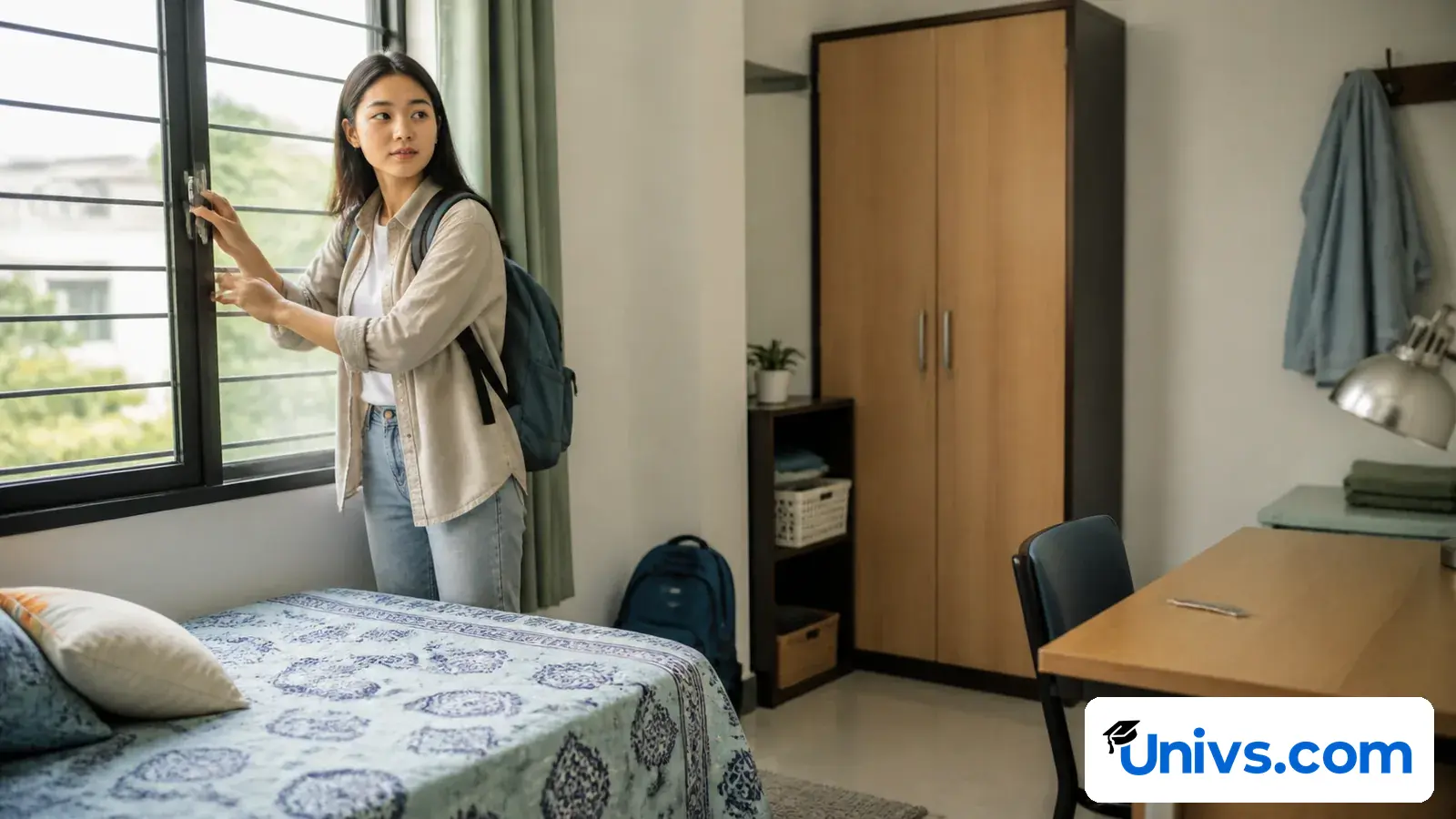
On move-in day, compare the room with the written allocation or agreement. Photograph the room, furniture, appliances and any existing damage, then send the record to the residence office or landlord through a traceable channel. Note meter readings where utilities are billed separately and test keys, locks, water, power, internet and essential safety equipment.
Use the named institutional account or verified contractual payee. A receipt should show the property, payment purpose, amount, date and balance. Keep deposit evidence until the final inspection and obtain a written move-out statement. If the room materially differs from what was promised, document the difference before accepting a replacement or signing a new term.
Common housing mistakes
-
Assuming admission includes a hostel room.
-
Choosing by photograph without checking campus distance.
-
Paying an unverified personal account or cash without a receipt.
-
Ignoring deposits, utilities, meals and transport in the budget.
-
Accepting a contract that does not identify the room or refund rules.
-
Failing to ask whether the address works for registration evidence.
-
Arriving outside check-in hours without a backup plan.
What to verify before you decide
-
The teaching campus and realistic daily commute.
-
Provider or landlord identity and authority to rent the room.
-
Room, occupancy, facilities, safety and accessibility.
-
Total cost, deposit, meals, utilities and refund terms.
-
Agreement period, notice, guest and curfew rules.
-
Address evidence for the institution and FRRO/FRO.
-
Arrival, check-in and emergency arrangements.
Do Indian universities guarantee hostels?
No general hostel guarantee applies to every student. Ask whether your exact admission offer includes an allocated room or only eligibility to apply, how priority works and when allocation is confirmed. Get the room, charges, contract period and meal arrangements in writing before travelling.
How much is student accommodation?
Study in India gives an indicative national accommodation figure within a broader planning example, but actual prices vary by city, room, provider and included services. Request a current quote from the campus or housing provider, and compare deposits, utilities, meals, contract dates and commute.
What is paying-guest accommodation?
Paying-guest or PG housing is a private room arrangement that may include furniture, meals or selected services, depending on the provider. Terms and standards differ. Confirm the actual room, price, included utilities, visitor rules, deposit and written cancellation conditions before paying.
Should I pay before receiving the visa?
Check the provider’s refund and cancellation terms before transferring money while immigration remains uncertain. Prefer a confirmed written agreement and traceable payment, and avoid large non-refundable commitments where possible. A housing booking does not establish visa approval or permission to enter India.
Can I rent a flat with other students?
Shared rental may be possible, subject to the landlord, local rules, building terms and the documents needed for your stay. Verify the person’s authority, use a written agreement and confirm address documentation with your institution. Budget utilities, deposit, furnishing and the actual commute.
What should I inspect on move-in?
Record the room’s condition, locks, windows, water, electricity, ventilation, fire exits, internet, furniture and any existing damage. Confirm the inventory, meter readings, maintenance contact and payment receipt. Take dated photos with permission and keep the signed agreement and move-in checklist.
Choose the room you can prove
A useful housing decision has a verified owner, exact address, written terms and a workable commute. If one of those is missing, keep looking. For related planning, explore programmes on Univs, review how Univs works and browse student life guides.
Sources used: Study in India FAQ and living-cost illustration; Study in India local support; Study in India FRRO guidance; Ministry of Home Affairs emergency-response guidance. These sources matter because cost, local settling and immigration-address evidence affect the housing decision differently.
Primary sources
Editorial note
Requirements can change and may differ by institution, programme and applicant. Recheck current university and government guidance before paying or travelling.
For comparisons, we assess the stated student brief, current route availability, discovery breadth, application ownership, progress visibility, support, costs and duplicate-application risk. Univs publishes this page and may have commercial relationships with institutions; those relationships do not determine admission decisions. Read our editorial standards.


