Azerbaijan's higher-education system includes state and non-state universities, academies, institutes and conservatoires. The official statistical system recorded 51 higher-education institutions at the start of 2024/25: 41 state and 10 non-state institutions. That historical statistical count is not the current active catalogue count. The Ministry's four static category pages list 51 numbered providers, but a later 30 July 2026 Ministry decision states that Baku Girls' University was not accredited, its licence was revoked and educational activity stopped. The current active catalogue therefore contains 50 providers. Higher education follows a bachelor-master-doctoral structure, and Azerbaijan has participated in the Bologna Process since 2005. Institutions require legal authority to provide education, while the Education Quality Assurance Agency, known as TKTA, carries out institutional and program accreditation. Applicants should verify the institution, the specific program and the current accreditation outcome rather than relying only on marketing or a global ranking.
International applicants normally apply through the Study in Azerbaijan Centralized Admission Service, SIACAS, at portal.edu.az. The institution assesses the application and may request an interview, additional evidence or payment after its review. Teaching can be in Azerbaijani, Russian, Turkish or English, depending on the university and program; language and preparatory requirements must be confirmed for the exact course.
The academic year begins as a rule on 15 September and is commonly organised into two semesters, with a possible summer semester. Fees and deadlines are institution-specific. Immigration is a two-stage concern: an applicant may need an entry visa appropriate to education, and a full-time student who will remain in Azerbaijan must obtain a temporary residence permit on the study ground before existing lawful stay expires. Visa, residence, work, safety and border information can change and was last checked on 22 August 2026.
Provider check: confirm the institution through official Ministry and Study in Azerbaijan sources and the current national inventory.
Legal-authority check: educational institutions require the applicable licence or other legal authority to conduct educational activity.
Institutional accreditation: TKTA evaluates compliance with state education standards and normally carries out institutional accreditation every five years.
Program accreditation: TKTA separately evaluates a program's resources, teaching quality, learning outcomes and labour-market alignment.
Decision check: use the current Accreditation Council and licence outcomes even when a static provider page is stale; Baku Girls' University is excluded after the 30 July 2026 licence revocation.
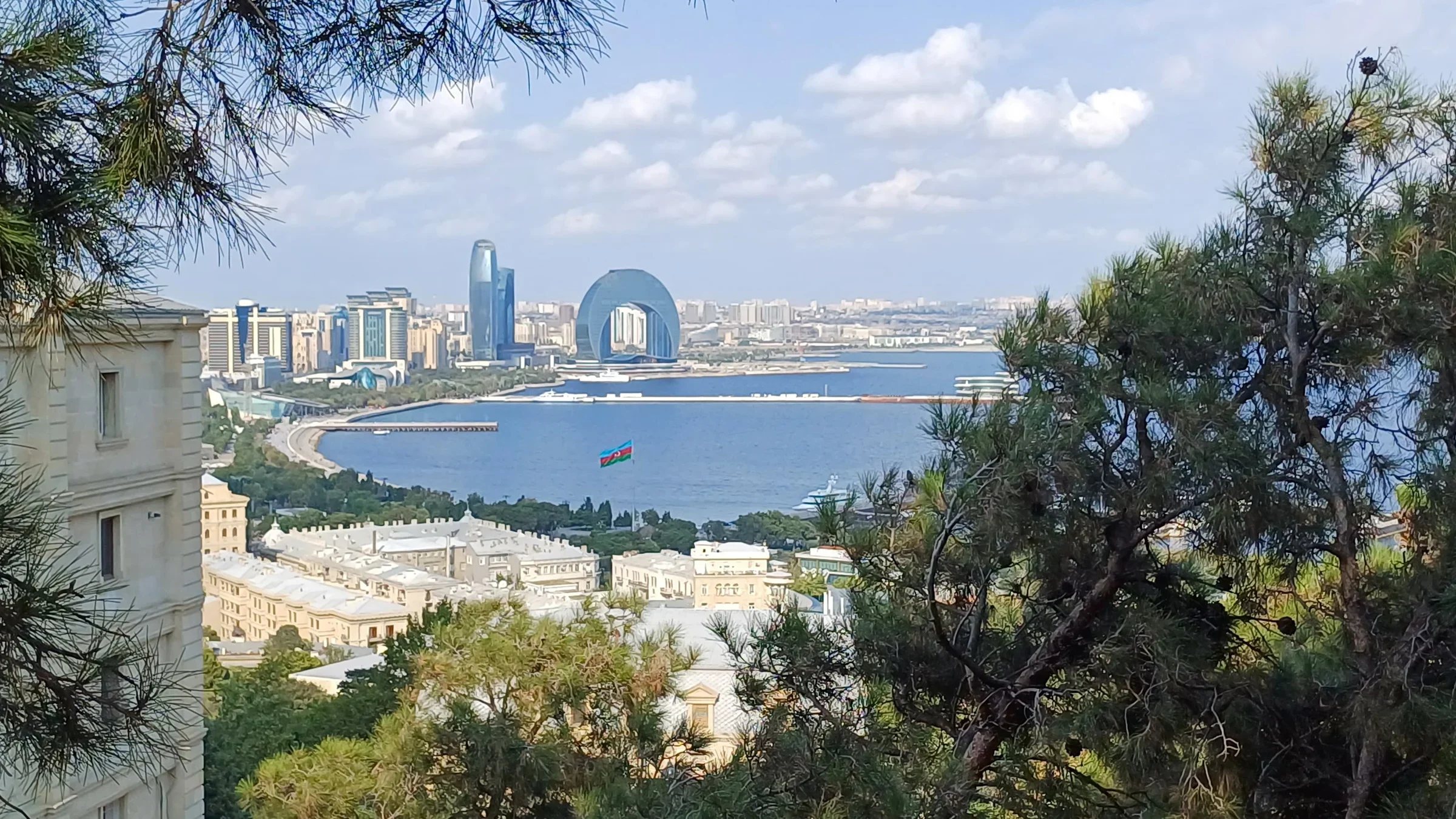
Capital
Baku
Language
Azerbaijani is the state language. Higher-education programs may be taught in Azerbaijani, Russian, Turkish or English, depending on the institution and program.
Currency
AZN
Academic Year
As a rule, the academic year begins on 15 September and lasts 12 calendar months. Official system guidance describes two semesters of 20 weeks each and a possible six-week summer semester.
Intakes
The principal intake starts in September. Institution, scholarship, exchange and preparatory-course application windows vary; any additional intake must be confirmed directly with the provider.
Intl. Students
State Statistical Committee: 7,472 foreign bachelor/master students at the start of 2024/25. Study in Azerbaijan promotes 9,500 using an unspecified broader or different scope.
Work Rights
International students do not receive an automatic part-time work entitlement merely because they hold student residence. Articles 51 and 64 of the Migration Code require a foreign national who wants paid employment to hold a work permit in addition to temporary residence unless a listed exemption applies; ordinary full-time student status is not one of the listed exemptions. The employer applies for and pays for the work permit, and labour-market conditions and quotas may apply. Students should obtain written confirmation from the State Migration Service before starting any paid, freelance or internship activity. Checked against the Migration Code and current fee guidance on 22 August 2026.