

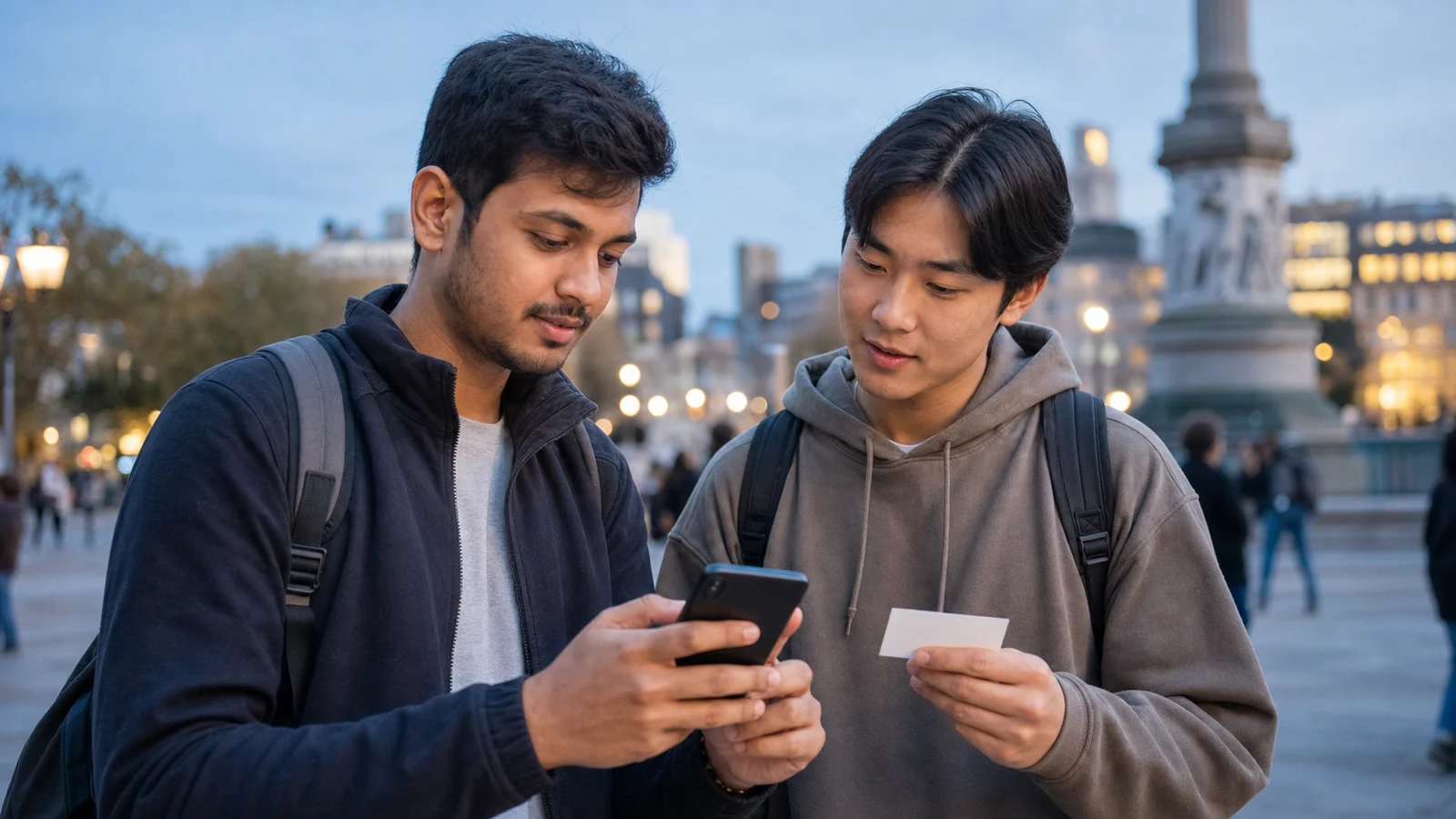
A student safety plan should be prepared before an emergency, when there is time to check addresses, phone access and trusted contacts. It should cover immediate danger, medical needs, lost documents, housing problems and ordinary support without treating every difficulty as an emergency.
This guide provides practical preparation, not a guarantee of response time or personal legal advice. For immediate police, fire-rescue or ambulance assistance in Georgia, use the official single emergency number.
Save 112 correctly
Georgia’s official 112 service is the single emergency number for police, fire-rescue and ambulance assistance. Save it as 112, not with an international prefix. Use it when urgent help is genuinely needed, not for routine university or transport questions.
Know what to say first
State the emergency type, exact location and whether anyone is in immediate danger. Give the street, building, floor, nearby landmark and phone number if possible. If language is difficult, use short clear sentences and keep a written address in Georgian available.
Share your first address with a trusted person
Before arrival, provide a family member or trusted contact with the verified accommodation address, university and local contact. Update them when the address changes. Do not post room numbers, travel plans or identity documents publicly.
Create a local contact card
Keep the university’s responsible student contact, landlord or residence manager, insurance assistance line, bank card-loss number and a trusted friend in one offline note. The Univs student portal guide explains where platform messages and process records fit; the portal is not a replacement for emergency services.
Medical needs require preparation
Carry essential medicine safely, keep prescriptions or relevant medical information and understand the current insurance assistance route. If urgent symptoms appear, call 112. For non-urgent care, use the appropriate clinic or insurer process rather than delaying until the condition becomes an emergency.
Protect passports and residence documents
Store the original securely and keep a protected copy where it can be accessed if the original is lost. Do not hand a passport to a landlord, employer or unofficial agent as security. If a document is lost or stolen, record what happened and contact the responsible police, embassy or authority promptly.
Housing safety starts with basic checks
Confirm locks, building access, smoke or fire information, heating equipment, electrical condition and who can enter. Know the exit route without relying on a lift. Report urgent hazards in writing and do not attempt repairs involving gas or electricity without a qualified person.
Use safer transport habits
Plan the route, check the vehicle and driver in the official taxi app, and avoid an unsolicited pickup. Keep enough battery and funds for an alternative. If you feel unsafe, move to a busy, lit place and contact a trusted person or emergency service as appropriate.
Online safety affects physical safety
Do not share live location, passport scans, apartment access codes or class timetables in public groups. Treat unexpected messages about an emergency payment with caution; independently call the person or organisation. A copied logo or familiar name does not prove identity.
Harassment, threats and discrimination
Move to safety, preserve messages or other evidence and tell a trusted contact. Use the university’s responsible reporting route for campus matters and police or emergency services for immediate danger. Do not confront a threatening person alone to collect better evidence.
What belongs in an incident record?
Write the date, time, place, people involved, what happened and any report or reference number. Preserve original files and receipts. Keep the account factual rather than adding assumptions. This helps an insurer, university, bank or authority understand the sequence.
Separate emergency, university and platform support
112 handles urgent public emergencies. A university handles academic or campus processes. An insurer handles policy assistance. Univs handles its platform and application support. Sending the same issue to every channel can slow the response and expose unnecessary private information.
Create a check-in plan for unfamiliar journeys
For a first visit, late return or trip outside the usual area, tell a trusted person the destination and expected return time. Share live location only with someone you trust and stop sharing afterwards. Agree what they should do if you miss the check-in instead of creating uncertainty.
Keep a small emergency kit
Carry a charged phone, power bank, essential medicine, a little cash, the accommodation address and a trusted contact. Do not carry every original document daily. The kit should support a short disruption without becoming a visible package of valuable personal information.
Review safety information after moving
Update contacts, exits, transport alternatives and the nearest appropriate medical route whenever the address or campus changes. A plan prepared for the first residence may be wrong after a move. Review it again before winter, travel or a placement in another location.
Prepare without becoming alarmed
Read the Georgia study destination guide and review current student services before travel. A calm plan—correct number, clear address, charged phone and trusted contacts—makes ordinary student life easier and provides a reliable next step when something serious happens.
Editorial note
Requirements can change and may differ by institution, programme and applicant. Recheck current university and government guidance before paying or travelling.
For comparisons, we assess the stated student brief, current route availability, discovery breadth, application ownership, progress visibility, support, costs and duplicate-application risk. Univs publishes this page and may have commercial relationships with institutions; those relationships do not determine admission decisions. Read our editorial standards.