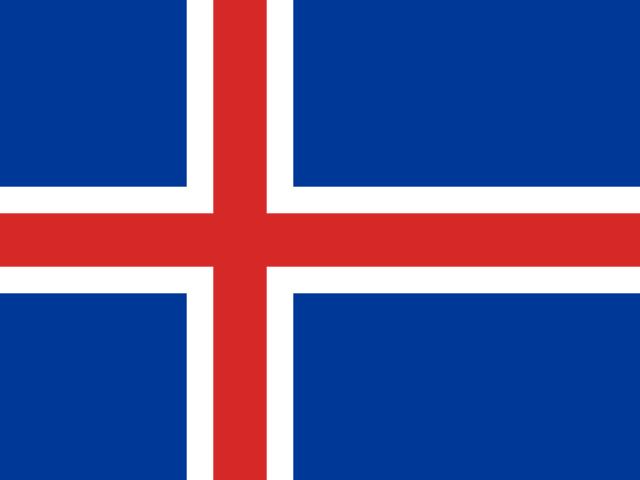
Iceland's current higher-education universe contains seven nationally accredited institutions. The current IAQA review cycle corroborates the same seven-provider structure. A July 2026 change places Hólar inside the University of Iceland consortium under the name University of Iceland at Hólar, while preserving it as an autonomous member with distinct governance; this catalogue therefore keeps a separate Hólar profile and records the parent relationship. Provider accreditation does not prove the status, language, professional recognition, location or availability of every programme. Applicants should verify the exact award and current institution evidence before applying. Programmes and courses are outside this phase.
Higher-education institutions and academic fields require ministerial accreditation under Icelandic law.
The Icelandic Agency for Quality Assurance conducts independent institution-wide reviews.
The national quality framework is aligned with ECTS and the three-cycle European degree structure.
Provider status does not automatically prove each programme, professional outcome or teaching location.
Capital
Reykjavík
Language
Icelandic is the official language. English is widely used in international services, but the teaching language remains programme-specific.
Currency
ISK
Academic Year
Traditional academic year: September-May; autumn generally early September-late December and spring early January-late May.
Intakes
September is the principal intake. January, summer and other starts are limited and institution-specific.
Intl. Students
The current official Study in Iceland portal says approximately 18,000 higher-education students and about 5% international. The statement is undated and is retained as a portal estimate, not a current statistical census.
Work Rights
Checked 22 August 2026: holders of a valid student residence permit may work as employees without a separate work permit for up to 60% of full-time employment in total while studying. Eligible students may work more during scheduled academic breaks and formal training circumstances described by the Directorate. Self-employment remains prohibited. First-time applicants may not begin work until the permit has been issued, and employment evidence is reviewed at renewal. EEA/EFTA students follow different residence rules but must still comply with Icelandic employment law.