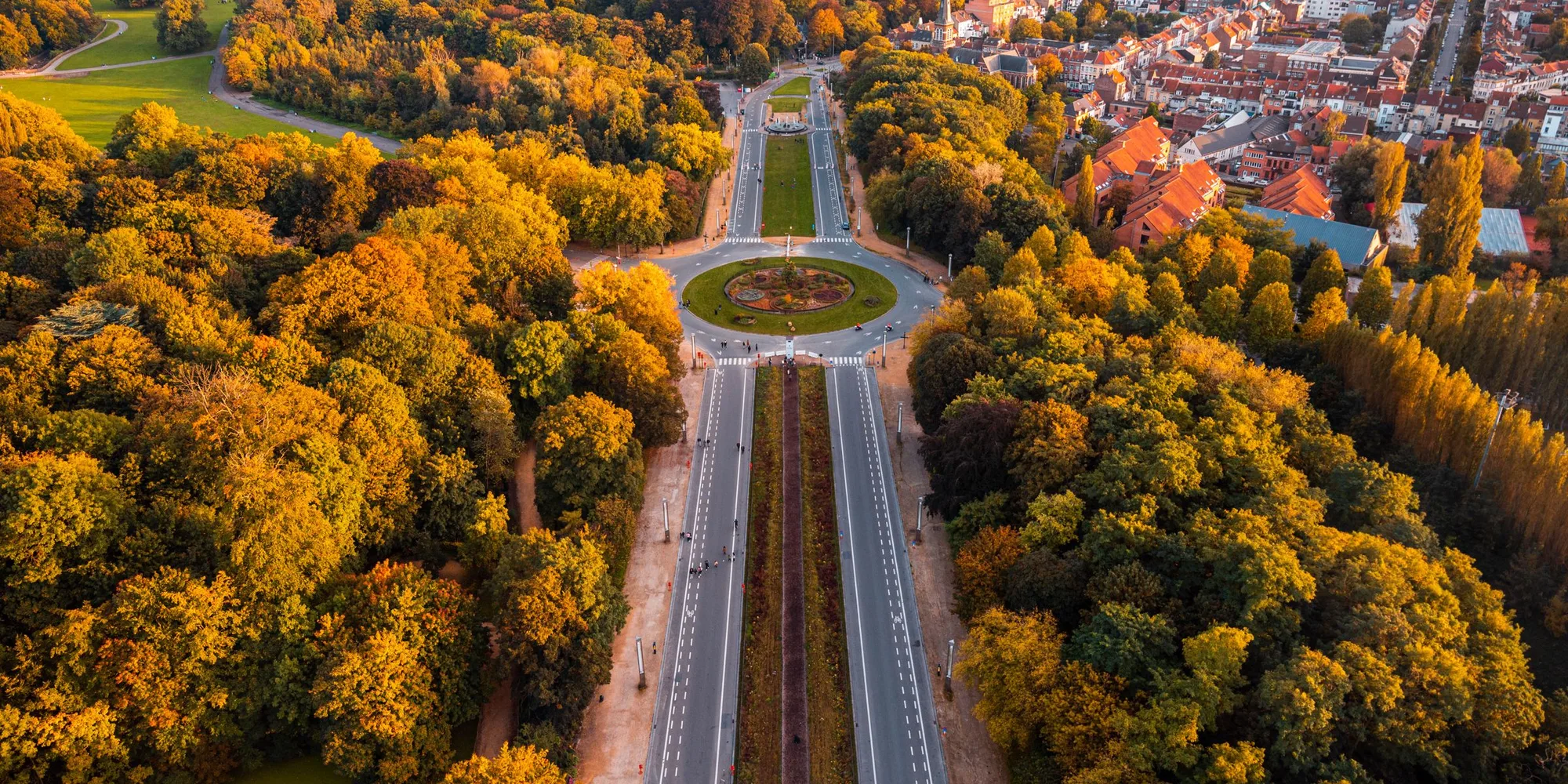
Health Insurance
Health-insurance coverage is required. EEA students should check whether an EHIC and any additional cover meet their needs; non-EEA students should follow the institution and Belgian insurer guidance applicable to their status.


Compare recognised institutions and programmes, understand regional tuition rules, and prepare for admission, budgeting and the Belgian student-residence process.
Belgium combines a varied higher-education system with multilingual study environments, internationally connected research and a central European location.
Study within the bachelor–master–doctorate framework and earn ECTS credits designed to support transparent workloads, credit transfer and academic mobility.
Choose from comprehensive research universities, applied and professional institutions, schools of arts and specialist providers across multiple Belgian cities.
Belgium has Dutch, French and German as official languages, while many institutions also offer English-taught programmes—particularly at master's level.
Brussels hosts major European and international organisations, and Belgium's rail and transport links make neighbouring countries and cities accessible.
Universities of applied sciences and university colleges emphasise professional practice, projects and internships, offering an alternative to a purely research-led route.
EUR 800–1,300 per month
Most non-EU students planning full-time recognised higher education for more than 90 days must apply for a national long-stay Visa D through the competent Belgian diplomatic or consular post. EU/EEA and Swiss nationals generally do not need an entry visa but still complete local registration for a longer stay.
Up to 90 days for a complete file
Health-insurance coverage is required. EEA students should check whether an EHIC and any additional cover meet their needs; non-EEA students should follow the institution and Belgian insurer guidance applicable to their status.
Up to 12-month orientation year
Applicants normally need a secondary-school qualification that grants access to higher education. Flanders commonly requests proof that the diploma gives university access in the awarding country; French-speaking Belgium may require formal equivalence. Medicine, dentistry, veterinary science, engineering and arts routes can have additional examinations or selection.
Apply directly through the chosen institution. Because Belgium has regional systems and institution-specific deadlines, students should confirm the exact procedure before preparing immigration documents.
Belgium offers research universities, applied and professional institutions, schools of arts and specialist providers within a multilingual European setting. The right choice depends on programme quality, language, admission fit, tuition and city—not the country label alone.
Brussels is the federal capital of Belgium.
Belgium's official languages are Dutch, French and German. The language of instruction depends on the community and programme, and many institutions also offer English-taught courses.
Belgium uses the euro (EUR).
Belgian higher education uses the bachelor–master–doctorate structure and ECTS, supporting academic comparison and mobility. Recognition for a regulated profession or a specific country must still be checked with the relevant authority.
A bachelor's degree commonly represents 180 ECTS, or three academic years, although some professional or specialised routes can be 240 ECTS and four years.
Master's programmes commonly range from 60 to 120 ECTS, with some fields extending further. Always verify the exact programme structure.
Sixty ECTS normally represents one full academic year of study. Credits describe learning workload and support transfer and comparison across participating systems.
Yes. English-taught options are available, especially at master's level, but availability varies by institution and subject. Check the official programme page for language and test requirements.
Not always. For most English-taught Flemish programmes, B2 English is a general starting point and IELTS 6.0 is listed as a typical minimum, but institutions may accept alternatives or require a higher score.
The main academic year begins in September. Universities and applied institutions may start on slightly different dates, and only a limited number of programmes allow a February start.
Deadlines are institution- and programme-specific. Flemish applications commonly open around November–December, while official French-speaking guidance recommends many non-EU applicants apply in February and often before 31 March. Confirm the exact deadline.
For 2026–27, Flemish guidance lists EUR 1,157 for EU/EEA students and EUR 2,300–9,500 for non-EU/EEA students for a 60-ECTS programme. French-speaking Belgium lists a maximum EUR 1,194 for eligible EU students and a standard EUR 5,369 for most non-EU students, subject to exemptions and exceptions.
Current official regional guides indicate about EUR 800–1,000 per month in Flanders and Brussels and EUR 1,000–1,300 in French-speaking Belgium. Budget more for the first month, deposits and higher-cost housing.
Official Flemish guidance places many private student rooms around EUR 450–600 per month. The French-speaking budget example uses about EUR 575 including utilities. City, contract and room type can change the figure.
EU/EEA and Swiss nationals generally do not need an entry visa, but students staying longer must follow municipal registration and residence formalities.
Most non-EU students entering full-time recognised higher education for more than 90 days must apply for a national long-stay Visa D through the competent Belgian embassy or consulate.
A decision on a complete recognised-higher-education student file must be made within 90 days. Appointment waits and requests for missing documents can add time, so apply early.
The core file includes a valid passport, the prescribed institution certificate, sufficient-means evidence, health insurance, a medical certificate and—where applicable—criminal-record evidence, parental consent, translations and fee proof.
For 2026–27, the indexed minimum is EUR 1,062 net per month. A 12-month blocked-account route therefore equals EUR 12,744, excluding tuition and other upfront costs.
It is an accepted way to demonstrate sufficient means by depositing the required amount into an eligible blocked-account arrangement. The institution or accepted provider then follows the applicable release procedure. Confirm the exact route before transferring funds.
From 1 July 2026, the long-stay Visa D handling fee is EUR 250. A separate 2026 Immigration Office contribution of EUR 251 applies to recognised public higher-education study where applicable; service, translation and legalisation costs can be extra.
Eligible non-EEA students with legal residence may work up to 20 hours per week during the academic year and more during official holidays, as long as work does not conflict with study requirements.
A student job can supplement a budget, but official guidance warns against relying on work to finance the full study stay. Visa financial proof, tuition and upfront housing costs should be planned independently.
Yes. Students need appropriate health-insurance coverage. EEA students should check EHIC arrangements, while non-EEA students should follow the institution and Belgian insurer guidance for their status.
Yes, but they are competitive and scheme-specific. Examples include Master Mind, MASTER IN – WBI, Erasmus Mundus, VLIR-UOS and institution-level awards. Deadlines often fall early.
It is a Flemish scholarship for outstanding international master's applicants. For 2026–27 it provided EUR 10,225 and a tuition-fee waiver per academic year; that call is closed and the next call must be checked.
It supports eligible international students entering a master's in recognised French-speaking Belgian higher education. The 2026–27 grant is EUR 10,020 over 12 months and does not cover every cost; that call's deadline was 31 March 2026.
Eligible non-EEA graduates may apply for an orientation-year residence period of up to 12 months to seek work or start a business. It is not automatic permanent residence and cannot be extended as an orientation-year permit.
Check the chosen institution and programme, the competent Belgian diplomatic post, and the Belgian Immigration Office. Tuition, immigration thresholds, fees, scholarships and deadlines change over time.
Explore
Resources
Partners
Company
Legal & privacy
© 2026 Univs LLC, trading as Univs.com · All rights reservedInstall our app for faster access, offline support, and a better experience.
Connect to Wi-Fi or mobile data, then try again.