

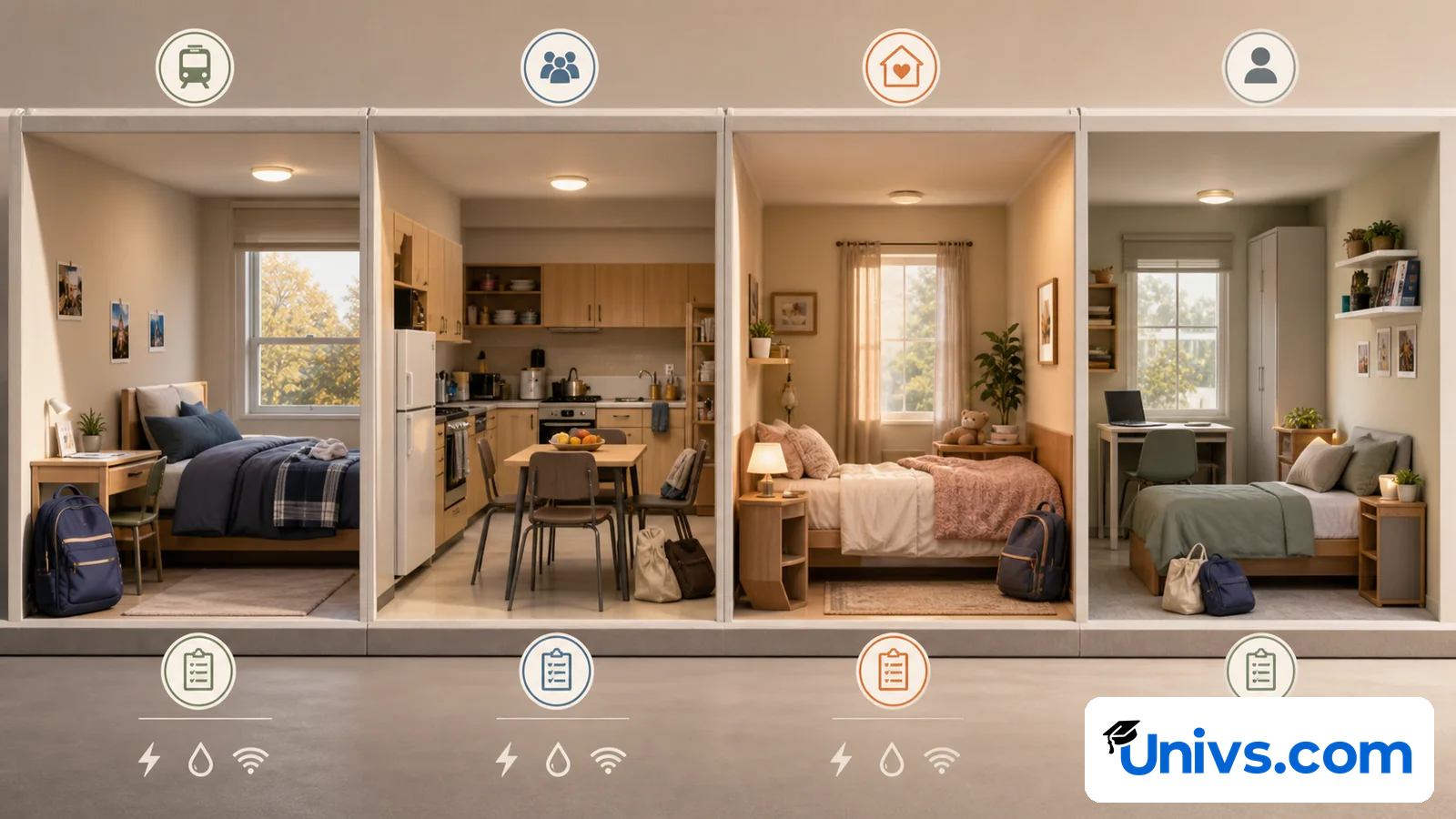
EduCanada describes institution residence and off-campus private housing; international students may also consider verified shared rentals or homestays. Residence can simplify the first term but may require an early application and a meal plan. Private housing offers more choice but brings lease, utility, furnishing and fraud risks. Homestay can include meals and household support, though rules and commute need checking. There is no reliable national rent figure for one student's decision: costs vary sharply by city, neighbourhood, room type, contract period and included services. Compare total monthly cost, not headline rent. Confirm the property, landlord or provider, lease, deposit, utilities, insurance and journey to the actual campus before paying. Provincial and territorial tenancy rules differ, and campus accommodation may follow separate contractual policies.
Housing options at a glance
| Option | Possible advantage | Main check |
|---|---|---|
| Institution residence | Close to campus and often furnished | Availability, meal plan, closure dates and contract |
| Shared private rental | Can spread rent and utilities | Who is on the lease and how costs are divided |
| Private apartment or studio | Privacy and control | Total cost, tenancy terms and property legitimacy |
| Homestay | Household setting, sometimes with meals | Provider screening, rules, meals and commute |
| Short-term arrival stay | Time to inspect longer-term housing | Cost, cancellation terms and realistic search time |
Start with the actual campus
A school can have more than one campus. Confirm where your programme is taught before evaluating a neighbourhood or residence. A listing described as “near the university” may be far from your classes.
Test the commute at the hours you expect to travel. Include walking in winter, transfers, service frequency and the last evening connection. A lower rent can stop being economical when daily transport and lost time are added.
Institution-managed residence
Residence may offer furnished rooms, utilities, internet, communal facilities and organised support. It can be attractive for a first year, but demand may exceed supply. Admission does not normally mean a room is reserved.
Check the housing application and deposit deadlines separately from academic admission. Read room-assignment rules, meal-plan obligations, guest policies, cancellation terms and dates when the building closes. Compare the full contract price with the number of weeks covered.
Private rentals and shared housing
A private lease may cover an apartment, studio or room. Shared housing can reduce costs, but responsibilities must be clear. Identify whether each occupant signs the lease, one tenant sublets to others, or the landlord rents rooms separately.
Ask what is included: heat, electricity, water, internet, laundry, furniture, parking and insurance. Confirm whether a guarantor, credit check or proof of income is requested. Requirements and permitted deposits depend on provincial or territorial law.
Ask whether the quoted room is the one you will actually occupy, and retain the listing version used for your decision.
Confirm the move-in inspection process, how existing damage is recorded and who receives a maintenance request. Photograph the condition only after you lawfully enter the property.
Homestays
Homestay can provide a furnished room and sometimes meals in a household. It may help a new student settle, but quality and arrangements vary. Use an institution-recommended or otherwise verifiable provider where possible.
Get written terms for meals, kitchen access, laundry, guests, quiet hours, household expectations, refund and notice. Confirm travel time to campus and how hosts are screened. “Family experience” should not replace a clear contract.
Calculate total cost rather than rent alone
Add rent, deposits, utilities, internet, furniture, tenant insurance, laundry, transport and any meal plan. Include temporary accommodation between arrival and lease start, and storage or travel if the contract does not cover institutional breaks.
For residence, divide the full charge by the weeks included before comparing it with monthly rent. For private housing, ask about likely seasonal utility costs. Keep an emergency amount for moving or replacing essentials.
Understand the contract before paying
Read the names, address, room description, start and end dates, rent, included services, deposit, notice, renewal and early-termination terms. Never assume a verbal promise will override the written agreement.
Private tenancy law is provincial or territorial. Official government tenancy information is the right place to confirm permitted deposits, rent increases, repairs and dispute routes. Institution residence may instead operate under its own occupancy agreement.
How to reduce housing-scam risk
-
Reverse-check the address and images across listings.
-
Verify the landlord, agent or provider independently.
-
Use a live video viewing or trusted in-person inspection if you cannot attend.
-
Ask for a written agreement before paying.
-
Refuse payment to unrelated personal accounts or by untraceable methods.
-
Do not send identity documents beyond what is necessary and legitimate.
-
Question prices far below comparable verified listings.
Arriving before a long-term lease starts
If you cannot verify private housing remotely, a short, legitimate arrival stay can create time for viewings. Confirm cancellation terms and ensure the stay gives enough time to search in the local market. Keep the institution's housing office and newcomer resources on your contact list.
Do not arrive without an address or a realistic temporary-housing plan. A short stay can quickly consume the housing budget, so confirm its cancellation terms and local viewing schedule in advance.
Roommates, safety and accessibility
Discuss cleaning, bills, guests, quiet hours and shared purchases before moving in. Ask who can access the property and how locks and repairs are handled. If you need accessible housing, verify doorway, bathroom, lift, transport and evacuation details rather than relying on the word “accessible”.
Know how to contact campus security, local emergency services and the relevant tenancy body. Discrimination and harassment concerns should be documented and reported through the appropriate channel.
Common accommodation mistakes
Students lose money by applying late for residence, paying before verifying a listing, overlooking a mandatory meal plan, choosing a distant suburb from a map alone, or signing a lease longer than the study period. Another common error is assuming a deposit is refundable without reading the relevant contract and law.
What to verify before you decide
-
The programme's actual campus and a realistic commute.
-
The provider's identity and authority to rent the property.
-
Total cost, included utilities, furniture, meals and transport.
-
Lease or residence dates, deposit, cancellation and refund terms.
-
Applicable provincial or territorial tenancy protections.
-
Health, safety, accessibility and insurance arrangements.
-
A documented payment method and receipt.
Is residence guaranteed after admission?
Usually not. University housing commonly has its own application, deadline, eligibility rules and limited room supply. Ask whether your offer includes a guaranteed place, which contract dates apply and how deposits are refunded. Keep a private or temporary housing alternative until you receive written confirmation.
Is residence always more expensive than renting?
Not necessarily. Compare the same months and include utilities, furniture, transit, meals, deposits and lease length. Residence may bundle services, while private renting can add setup costs or a longer commute. Use current quotes near your campus rather than comparing headline monthly prices.
Should I pay a landlord before arriving?
Only after independently verifying the property, landlord, lease and payment instructions. Use official tenancy guidance for the province, request a signed agreement and avoid pressure to transfer money through an unusual channel. If verification is incomplete, book a flexible short stay and inspect before committing.
Are rental deposits the same across Canada?
No. Tenancy rules, deposit limits and handling differ by province or territory. Check the official housing authority for the property’s location and confirm what the landlord may collect, how it is held and when it must be returned. Do not rely on a generic national checklist.
What does homestay normally include?
Homestay terms vary by provider and household. The written agreement should state whether the room is furnished, which meals are provided, what utilities and internet are included, house rules, visitor policies and cancellation terms. Confirm the address and commute before paying a placement fee.
Do international students need tenant insurance?
It depends on the lease, residence contract and your own risk tolerance. A landlord or institution may require coverage, while a policy can protect belongings or liability. Read exclusions, deductibles and coverage limits, and confirm whether your belongings are covered during travel or a shared-room arrangement.
Next steps
Confirm the campus first, then compare at least two housing types with the same cost template. Begin with study options in Canada and browse institutions on Univs. See how Univs works and visit the Univs Help Centre while keeping payment and contract checks with the official provider.
Primary sources
Editorial note
Requirements can change and may differ by institution, programme and applicant. Recheck current university and government guidance before paying or travelling.
For comparisons, we assess the stated student brief, current route availability, discovery breadth, application ownership, progress visibility, support, costs and duplicate-application risk. Univs publishes this page and may have commercial relationships with institutions; those relationships do not determine admission decisions. Read our editorial standards.
