Skip to content
Select Page
hr flag

Study in Croatia

Croatia

Explore a Bologna-aligned European higher-education system, study locations from Zagreb to the Adriatic coast, and current official guidance for international students.

133Institutions
DZS publishes a citizenship-by-country table for 2023/24. No undated marketing count of represented nationalities is used in this pack.Nationalities
DZS recorded 3,947 foreign citizens among 148,383 students in 2023/24. Use the dated official figure; later AZVO totals do not publish the same citizenship breakdown on the cited table.Intl. Students
EUR 600–1,065
Monthly Living Cost
No single guaranteed study-residence processing time is published for every route. Apply as soon as admission documents are available and well before lawful stay expires.
Visa Processing Time

hr flag
About Studying in Croatia

Croatia is an EU and Schengen country whose higher-education system combines university study programmes with professional study programmes. The system is aligned with the Bologna three-cycle model and ECTS. The Ministry's open-data register, updated 15 April 2026, lists 133 higher-education legal entities, including universities, faculties, academies, university departments, universities of applied sciences and professional higher schools. Because some faculties and departments are separate legal entities within a parent university, this 133-row inventory should not be confused with AZVO's 129-institution analytical count; the catalogue preserves the Ministry register identities and records parent relationships. Croatian is the official language, while the official study portal lists more than 150 programmes in foreign languages. Applicants should verify the exact provider, programme, teaching language, qualification, campus, tuition and current accreditation before applying. Programmes and courses are outside this catalogue phase.
Register check: confirm the provider as a current legal entity in the Ministry higher-education register. Initial accreditation: AZVO evaluates new higher-education institutions and study programmes under the applicable quality-assurance framework. Re-accreditation: AZVO conducts periodic external evaluation using Croatian law and European/international quality standards. Programme check: verify the exact intended programme, delivery site, language and qualification separately from the provider. Outcome check: review the current accreditation recommendation, follow-up status or other decision rather than relying on old promotional claims.
Capital Zagreb
Language Croatian is the official language. Higher education is mainly in Croatian, with more than 150 programmes listed in foreign languages; verify the exact programme language.
Currency HRK
Academic Year Generally 1 October to 30 September. A representative 2026/27 Zagreb calendar has winter teaching 1 October-22 January and summer teaching 22 February-4 June; dates vary by institution.
Intakes The principal intake is autumn, with teaching commonly starting around October. Exchange or selected programmes may admit for the February summer semester; use each institution's current calendar.
Intl. Students DZS recorded 3,947 foreign citizens among 148,383 students in 2023/24. Use the dated official figure; later AZVO totals do not publish the same citizenship breakdown on the cited table.
Work Rights EU/EEA nationals have EU free-movement work rights subject to registration and ordinary employment rules. A third-country national holding temporary stay for university studies may work or self-employ without a separate work permit for no more than 20 hours per week, except when student practice is an integral part of the programme. International students can also use authorised Student Service arrangements. The official portal lists a 2026 minimum net student-work rate of EUR 6.56 per hour and a EUR 12,000 net annual tax-free threshold, but employment, tax and residence conditions must be rechecked before work begins.


Why Study in Croatia?

European degree structure

University and professional programmes use Bologna cycles and ECTS, supporting transparent workload and qualification comparison.

Academic and professional routes

The binary system lets students compare research-oriented university study with professionally oriented programmes.

Foreign-language options

The official portal lists more than 150 programmes in foreign languages; confirm the exact language and intake with the provider.

Distinct student cities

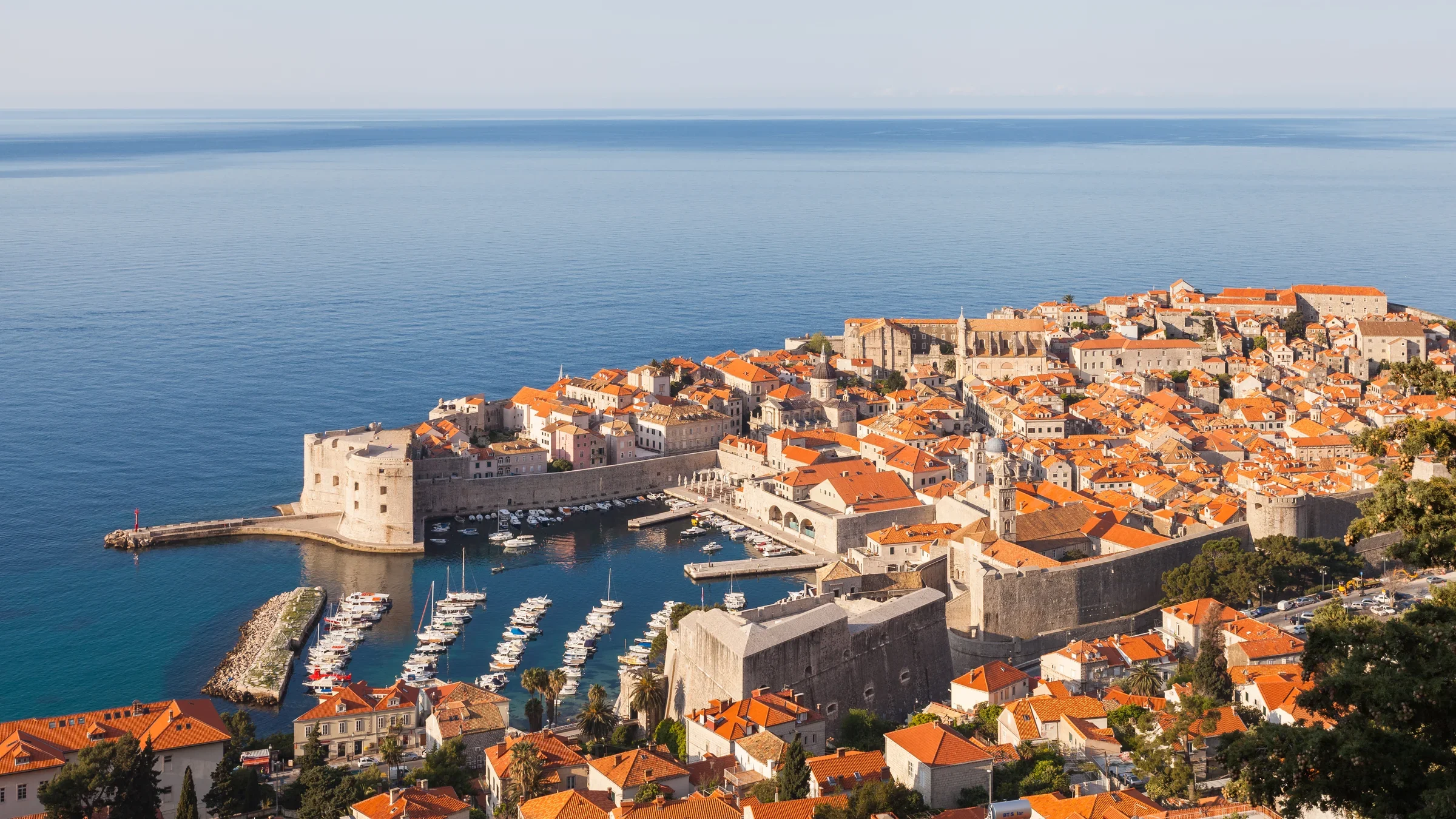
Zagreb is the largest hub, while Split, Rijeka, Osijek, Zadar, Pula and Dubrovnik offer different academic and living environments.

Central application support

Postani student supports undergraduate applications and diplomski.studij.hr supports selected graduate routes.

Part-time student work

Eligible international students can use Student Service; third-country study-residence holders may work or self-employ up to 20 hours weekly.

🏆
Croatia by the Numbers

133
Legal entities in the Ministry higher-education register resource updated 15 April 2026.
154,601
First- and second-cycle students reported by AZVO for 2024/25.
3,947
Foreign citizens enrolled in higher education in the DZS 2023/24 table.
1,800+
Study programmes promoted by the official Study in Croatia portal; programmes are outside this catalogue phase.

💰
Cost of Living & Visa

Monthly Living Costs

The official Study in Croatia portal gives a broad national estimate of EUR 500 to 800 per month and warns that larger and tourist cities can cost more. Current University of Zagreb guidance is higher for private housing: its itemised example totals about EUR 600 with a dormitory and about EUR 1,100 with a rented room. The structured items below reproduce the Zagreb categories and exact published values, totalling EUR 600 to 1,065 before rounding. Treat these as planning guidance rather than a guaranteed national budget, and obtain a current housing quote for the exact city and campus.

Accommodation and utilities
EUR 135–600 / month
Food
EUR 250 / month
Local transport
EUR 15 / month
Miscellaneous and study costs
EUR 200 / month
Estimated Monthly Total EUR 600–1,065 / month
Student Visa Guide
Visa guidance

EU/EEA nationals do not need an entry visa and may stay for up to three months, but must register temporary stay when studying longer. Third-country nationals must check whether they need a Schengen entry visa and must separately obtain temporary stay for university study. The standard route uses a Croatian diplomatic mission or consulate; specified students may also apply at the competent police authority after lawful entry. An entry visa is not a study-residence permit. Requirements depend on nationality, current lawful stay, program and mobility status, so use the Ministry of Foreign Affairs and Ministry of the Interior immediately before travel.

Required document

Completed Form 1a or the current application form for the relevant residence route.

Required document

Original valid passport or other accepted travel document and required copies.

Required document

Proof of admission or enrolment at a Croatian higher-education institution.

Required document

Proof of sufficient means of support using the current Ministry calculation and accepted evidence.

Required document

One current colour photograph measuring 35 x 45 mm when required.

Required document

Valid health-insurance evidence: EHIC, bilateral entitlement document or comprehensive private insurance as applicable.

Required document

First-application criminal-record certificate from the relevant country or countries, no older than six months where required.

Required document

Health-status and vaccination certificate using the current form, issued within 90 days where required.

Required document

Evidence of secured accommodation and the address to be registered.

Required document

Visa or residence fee-payment evidence at the stage instructed by the authority.

Required document

Any certified translation, legalisation, recognition decision or original requested for the applicant's foreign documents.

Required document

Parental consent and legal-representative documents for a minor where applicable.

Processing time

No single guaranteed study-residence processing time is published for every route. Apply as soon as admission documents are available and well before lawful stay expires.

Visa fee

Checked 22 August 2026: EUR 46.45 for temporary stay, EUR 31.85 for a standard biometric card or EUR 59.73 accelerated, plus EUR 9.29 administration; exemptions can apply.

🧭
Student Life & Practical Guidance

Health Insurance

International students must maintain health coverage accepted for their nationality and residence status. EU/EEA, Swiss and UK students may use EHIC where applicable; students from countries covered by a bilateral agreement may use the relevant entitlement form; other third-country students can use comprehensive private insurance if it meets the current residence requirements. If another valid basis does not apply, Croatian compulsory insurance registration may be required. Confirm the current position with HZZO and the Ministry of the Interior before applying and before travel.

After Graduation

Current official guidance states that international students who earn a qualification from a Croatian higher-education institution may extend their stay for up to one year to seek employment. The request should be filed no later than 60 days before the current temporary-residence permit expires and include proof of the qualification. This is a job-search residence opportunity, not automatic employment authorisation; graduates must satisfy the current work and residence rules for any job accepted.

Student Safety

Checked 22 August 2026: current FCDO guidance describes crime levels as low and violent crime as rare, while advising ordinary precautions against pickpocketing in tourist areas and attention around some events. Students should also follow Croatian authorities for wildfire, earthquake, flood, weather and road alerts. Legacy mine risk remains in specified previously war-affected and remote areas, so stay on marked routes and seek local advice. The nationwide emergency number is 112, free and available 24/7. Conditions can change; refresh both Croatian and home-government advice before travel.

Zagreb

Croatia's capital and largest study hub, with many providers distributed across the city rather than one campus. Check commute time before choosing housing; current university guidance shows private rent can lift the monthly budget well above the national estimate.

Split

A major Adriatic study centre with university and professional providers. Tourism season can tighten housing supply, so confirm the exact campus and secure a legitimate semester contract early.

Rijeka

A port-city higher-education centre in the Kvarner region. Compare hillside travel, bus routes and campus location when budgeting and selecting housing.

Osijek

A major eastern Croatian university city with multiple constituent faculties. Verify whether the provider is an independent legal entity within the parent university and confirm the teaching site.

Zadar

A coastal university city with historic-centre and newer-campus locations. Seasonal demand can affect rent, so plan housing and transport around the exact faculty.

Pula

An Istrian study location with university and applied-sciences options. Some institutions use bilingual naming; retain the register identity and verify the programme language.

Dubrovnik

A smaller but internationally connected study location. Visitor-season accommodation pressure can be significant, so a confirmed long-term contract and campus-specific budget are essential.

🏆
Scholarships & Financial Aid

Bilateral scholarships

Croatian government bilateral calls may support eligible countries and study types; eligibility, benefits and deadlines change by call.

CEEPUS

Eligible students and networks in Central and Eastern Europe can apply through current CEEPUS mobility rules and deadlines.

Erasmus+

Exchange and mobility funding depends on the sending and receiving institutions' agreements and the student's nomination.

Institutional aid

Some providers publish partial waivers or financial aid. A university offer does not itself prove an award, so obtain written scholarship terms.

Admission Requirements

General requirements

A school-leaving qualification supporting higher-education entry, applicable recognition, grades or examination results, language proof and any programme-specific subject, medical, aptitude or portfolio requirement.

General requirements

A relevant bachelor-level qualification and transcript, applicable recognition, language evidence and the programme's prerequisite, selection or interview requirements.

General requirements

A relevant prior degree, academic and research evidence, proposal or supervisor arrangements where required, and the institution's language and selection criteria.

General requirements

Valid nomination or agreement, academic approval, learning agreement, language evidence, insurance and the host institution's mobility deadlines and document set.

✏️
How to Apply

1
1. Verify provider and programme

Check the Ministry register, parent identity and current AZVO information, then confirm the exact programme and campus.

2
2. Confirm entry criteria

Review qualification, subject, grade, language, examination, interview, portfolio and medical requirements for the current cycle.

3
3. Start recognition

Begin the applicable foreign-qualification recognition or assessment early and arrange certified translations or legalisation.

4
4. Use the correct application route

Apply through Postani student, diplomski.studij.hr or the institution's official channel as specified for the level.

5
5. Verify costs before payment

Obtain written tuition, deposit, application-fee and refund terms and verify the official payee.

6
6. Accept the verified offer

Retain admission, enrolment and payment evidence and comply with any conditional requirements.

7
7. Arrange entry, residence and insurance

Follow nationality-specific visa and temporary-stay rules, obtain valid insurance and prepare the official document set.

8
8. Secure housing and enrol

Confirm a legitimate address, complete required registration and enrolment, and keep provider and immigration records current.

Frequently Asked Questions

The Ministry open-data register updated 15 April 2026 contains 133 current legal-entity rows. The catalogue preserves all 133 and records parent universities for faculties and departments. AZVO's separate 129-institution analytical figure uses a different counting unit and is not substituted for the register snapshot.

Check the provider in the Ministry register, then review current AZVO evaluation information and verify the intended programme separately. Parent-university recognition does not automatically establish every faculty programme or delivery site.

Croatia has university and professional study programmes within a Bologna-aligned three-cycle structure. ECTS is used to express workload.

Yes. The official portal lists more than 150 programmes in foreign languages, but availability, level, campus and intake change. Confirm the exact teaching language directly with the provider.

Undergraduate applications commonly use the Postani student central system. Applicants with foreign prior education must also complete the applicable recognition steps and satisfy programme-specific criteria.

Some graduate programmes use diplomski.studij.hr and others are institution-run. Postgraduate applications are handled by the institution, so use the current official call.

Usually, foreign prior education must go through the recognition or assessment route applicable to the level and application system. Start early because documents, translations and deadlines vary.

Each programme sets its own language evidence. Some Croatian-language programmes may require Croatian at B2, while English-taught programmes specify their accepted tests or other proof.

Institutions set their own fees. The official portal gives indicative annual ranges of EUR 1,100-10,400 for humanities/social sciences, about EUR 1,000-6,000 for natural/technical sciences and EUR 10,000-12,000 for medicine, plus possible application fees of EUR 60-300.

Possible routes include bilateral scholarships, CEEPUS, Erasmus+ and institution-specific aid or waivers. Eligibility and deadlines are call-specific; never assume an award from admission alone.

Study in Croatia estimates EUR 500-800 nationally, but larger and tourist cities can cost more. Current Zagreb guidance is about EUR 600 with dormitory housing and about EUR 1,100 with private accommodation.

No. Public dormitories have limited capacity and international students do not automatically receive a place. Arrange verified accommodation before arrival.

Some full-time and mobility students are eligible for the student card and subsidised cafeterias. Eligibility depends on status and arrangement, so confirm it with the host institution.

No entry visa is required for EU/EEA nationals. Those studying longer than three months must register temporary stay and provide the required enrolment, funds and insurance evidence.

Visa need depends on nationality. A visa-required student may need a Schengen entry visa and must separately obtain temporary stay for study. Check both ministries immediately before travel.

Checked 22 August 2026: published charges are EUR 46.45 for temporary stay, EUR 31.85 for a standard biometric card or EUR 59.73 accelerated, plus EUR 9.29 administration. Some scholarship recipients can be exempt from the EUR 46.45 charge.

It is normally granted for up to one year or the academic year; some recognised mobility cases can have different validity. Renew before expiry and keep enrolment conditions satisfied.

There is no single guaranteed processing time published for every student route. Apply promptly after admission and well before your lawful stay expires.

Eligible students can use Student Service. A third-country national with study temporary stay may work or self-employ up to 20 hours weekly, except integrated programme practice. Recheck residence and tax rules before starting.

Study in Croatia lists EUR 6.56 net per hour for 2026, with higher pay for specified night, Sunday and holiday work. Confirm the contract and current rate through the authorised Student Service.

Depending on nationality and status, acceptable proof can be an EHIC, entitlement under a bilateral agreement or comprehensive private insurance. Confirm coverage with HZZO and the residence authority.

Current official guidance says graduates of Croatian higher-education institutions may extend stay for up to one year to seek employment, applying no later than 60 days before the current permit expires with qualification evidence.

The academic year generally begins around 1 October. The University of Zagreb's 2026/27 calendar has winter teaching from 1 October to 22 January and summer teaching from 22 February to 4 June; other institutions publish their own dates.

The register shows providers across the country. Zagreb is the largest hub, with important options in Split, Rijeka, Osijek, Zadar, Pula and Dubrovnik. Confirm the exact campus before choosing housing.

Current FCDO guidance describes low crime and rare violent crime, but students should protect against pickpocketing and follow current advice for wildfires, earthquakes, floods, road conditions and legacy mine areas. Croatia's emergency number is 112.

🏛️
Universities in Croatia

See all 133 →

A university discovery and application platform connecting international students with verified participating institutions.

© 2026 Univs LLC, trading as Univs.com · All rights reserved

Essential storage keeps security, account routing, and your saved preference working. Optional measurement is disabled unless you choose to allow it.