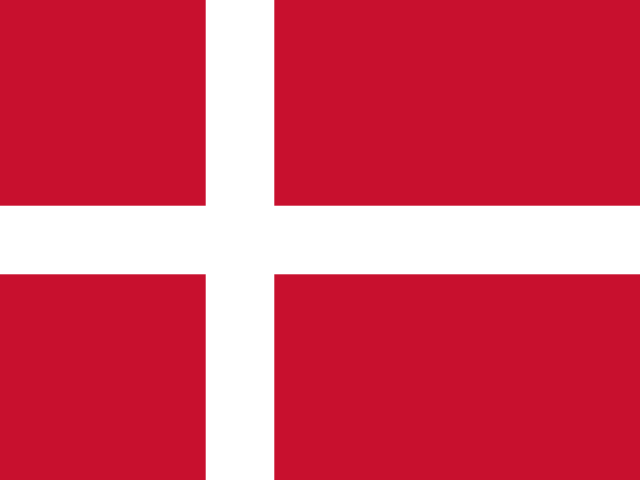
Denmark offers a compact, internationally connected higher-education system with research universities, professionally oriented university colleges and business academies, maritime schools and artistic institutions. Students can choose from more than 400 English-taught programmes in the current official programme database. Teaching commonly combines lectures with group work, problem solving, projects and collaboration with employers or research environments.
Denmark uses institutional and, in limited cases, programme accreditation. The Danish Accreditation Institution conducts reviews and the Accreditation Council makes decisions. Accreditation evaluates whether institutional quality assurance is systematic and effective.
Capital
Copenhagen
Language
Danish is the official language. English is widely used in international higher education, but the teaching language must be checked programme by programme.
Currency
DKK
Academic Year
Typically divided into an autumn semester from around September to January and a spring semester from around February to June. Exact teaching and examination dates vary by institution, facul…
Intakes
Main intake: autumn (August/September); selected programmes also begin in spring.
Work Rights
A non-EU student in a state-approved higher-education programme normally receives permission to work up to 90 hours per month from September through May and full-time in June, July and August. EU/EEA/Swiss students may work without a work permit. Programme approval and permit wording control the actual right.
September–May limit: State-approved programme: September–May limit