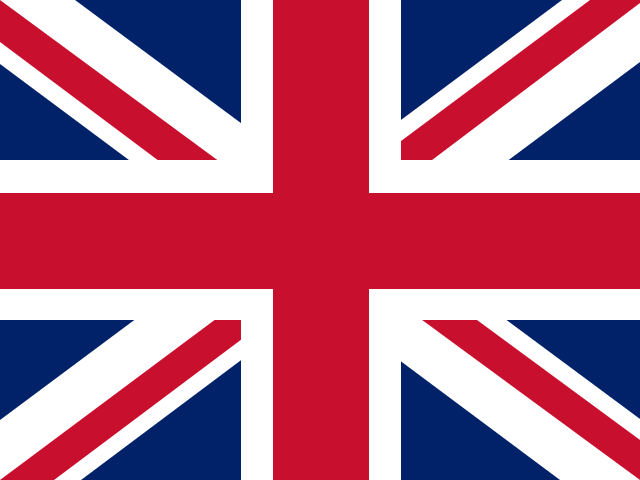
The United Kingdom brings together four distinct study destinations: England, Scotland, Wales, and Northern Ireland. Its higher education sector includes universities, specialist institutions, conservatoires, university colleges, and other recognised providers offering undergraduate, postgraduate, research, professional, and pathway study.
Course structures vary across the UK. Many undergraduate degrees take three years in England, Wales, and Northern Ireland and four years in Scotland, while many full-time taught master's degrees can be completed in one year. International applicants should compare the exact course, awarding body, provider recognition, professional accreditation where relevant, tuition, location, and Student visa sponsorship before applying.
Use Univs to compare listed institutions and programs, then confirm final fees, entry requirements, intake availability, and immigration conditions with the university and the relevant official authority before making a payment or travel commitment.
Check whether the awarding body can officially award the degree. A teaching college and the institution awarding the qualification may be different.
The OfS regulates registered higher education providers in England and publishes their regulatory status and degree-awarding information.
Use the official nation-specific recognised/listed-body route linked from GOV.UK when checking providers outside England.
The UK Quality Code is a shared quality reference; its regulatory role differs across England, Scotland, Wales, and Northern Ireland.
For regulated fields such as medicine, nursing, psychology, architecture, teaching, and engineering, verify the exact course with the relevant professional regulator and the country where the graduate intends to practise.
Capital
London
Language
English is the main language; Welsh is official in Wales. Other recognised regional languages include Scottish Gaelic and Irish.
Currency
GBP
Academic Year
Usually September or October to June; exact term dates vary by provider and nation.
Intakes
September/October is the main intake. Some universities offer January or February starts for selected postgraduate, pathway, and other courses. Undergraduate applicants should follow the UCAS cycle and the deadline for their exact course; postgraduate deadlines are set by each provider and can close earlier when places fill.
Intl. Students
685,565
Work Rights
A Student visa may permit limited work. A full-time degree-level student sponsored by a higher education provider with a track record of compliance is normally limited to 20 hours per week during term time and may work full time during official vacations. Eligible full-time study below degree level is normally limited to 10 hours; other or part-time study may permit no work. Self-employment and certain occupations are prohibited. The eVisa conditions are authoritative.