

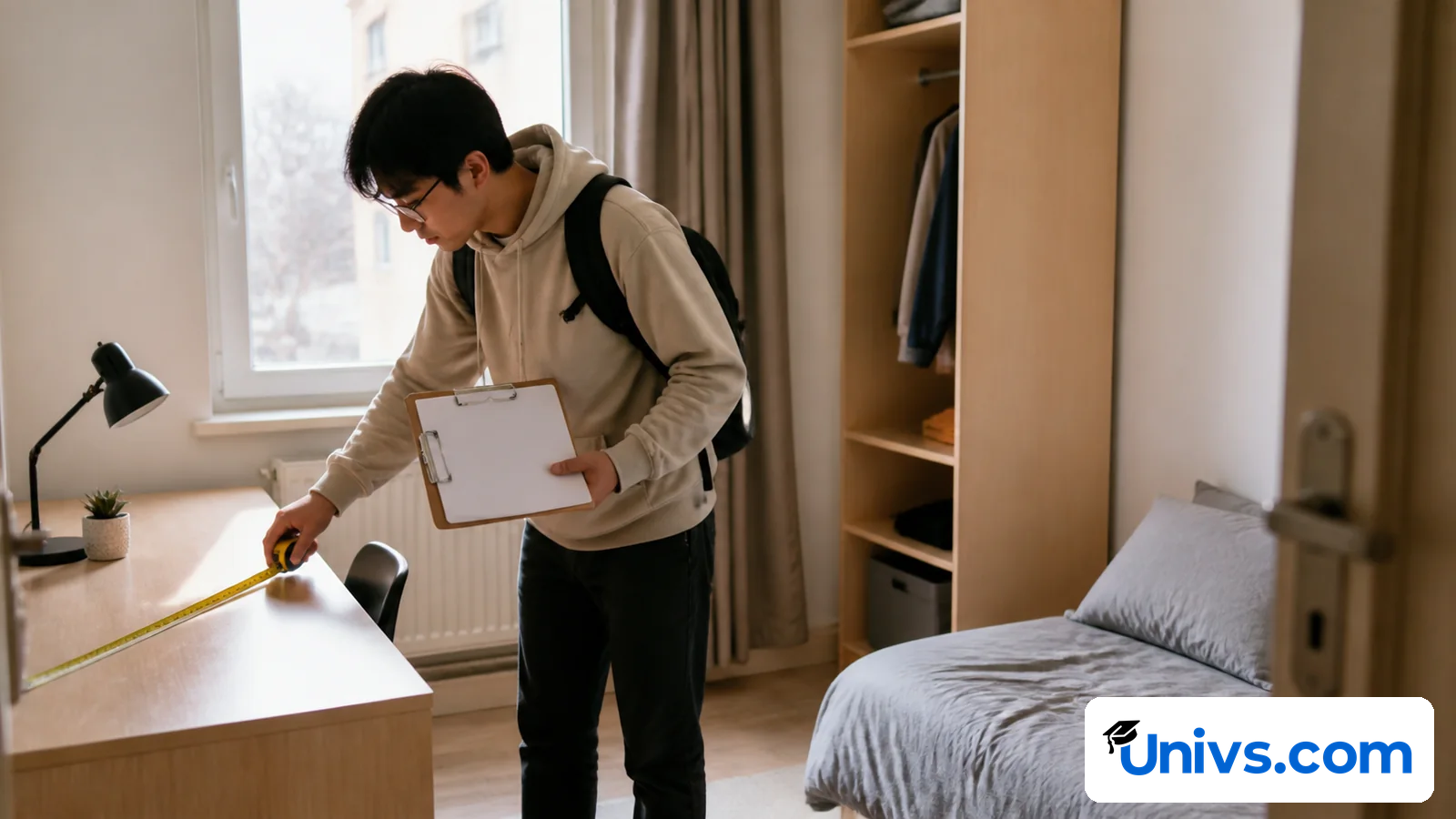
International students in Belgium usually choose between a student residence, a private student room known as a kot, a shared flat or a private studio. On-campus accommodation is limited in many places, so the institution’s housing service should be the first contact. Official Flemish guidance gives a planning range of about €450–€600 a month for a student room in Flanders or Brussels (housing guide). Official French-speaking guidance gives averages of about €465 a month for a university residence and €590 for private accommodation, including utilities (Wallonie-Bruxelles Campus). These are estimates, not fixed national prices. Before paying, verify the landlord or residence, exact address, contract length, deposit, included utilities, furniture, cancellation terms and whether municipal registration is allowed. Never transfer money from photos alone, and keep a temporary-arrival plan in case the permanent room is not ready.
Belgium student housing at a glance
| Option | Typical arrangement | Main check |
|---|---|---|
| Student residence | Private room with some shared facilities | Limited places, eligibility and move-in dates |
| Private kot | Furnished bedroom in a student house | Utilities, contract term and registration |
| Shared flat | Shared lease or separate rooms | Each tenant’s liability and deposit |
| Studio/flat | More private space | Higher rent, furnishings and extra charges |
| Temporary stay | Guesthouse or hostel | Availability near September and total cost |
Begin with the institution’s housing service
Official federal and community guidance recommends contacting the chosen institution. Housing teams may offer residences, verified platforms, contract information and advice for international students. They can also explain local terminology and neighbourhoods.
Institution help does not make every external listing safe. Confirm whether a recommended platform verifies landlords and what support exists if the room differs from the listing.
Understand what a kot is
A kot is a common Belgian term for student accommodation. It often means a private furnished bedroom with a shared kitchen, bathroom or living area. Some rooms have private sanitary facilities, and studios offer more independence.
Ask for the floor plan and inventory. “Furnished” may cover only basic furniture, leaving the student to provide bedding, cookware, towels and small household items.
Use official rent figures as estimates
Study in Flanders describes student rooms around €450–€600 a month in Flanders and Brussels. Wallonie-Bruxelles Campus gives an average of €465 for a university residence and €590 for private accommodation, including utilities.
Real prices depend on city, room type, building quality, contract, services and demand. Do not challenge a contract using a country average; use the range to test affordability and compare real offers.
Read what the rent includes
Confirm water, heating, electricity, internet, furniture, common-area cleaning and local charges. Some contracts include a fixed amount; others reconcile actual use later. Ask how extra consumption is calculated.
Photograph meters and room condition at move-in where relevant. Keep the signed inventory so pre-existing damage is not deducted from the deposit.
For a remote viewing, ask to see the entrance, room, window, locks, kitchen, bathroom, heating and fire-safety equipment in one continuous call. Compare what is shown with the inventory and contract. A wide-angle photo can make a room look larger, so request dimensions and storage details before deciding.
Check contract length and deposit
Flemish guidance notes that student rooms commonly use 10-, 11- or 12-month contracts, while flats can use longer residential terms. A flat may require a deposit of around two months’ rent on a blocked account.
Never assume an informal cash deposit is normal. Ask where the deposit is held, when it can be retained, how notice works and whether subletting is allowed. Read visa-refusal and delayed-arrival terms before signing.
Make sure the address works for registration
International students need a lawful address for municipal registration. Some accommodation arrangements may restrict official address registration or be intended only for short stays.
Ask the landlord and municipality whether registration is permitted. A cheap room that cannot support the required residence process may create a serious immigration problem.
Check the exact municipality as well as the city name. Registration appointments, local documents and practical travel can differ across municipal boundaries. Ask what proof of occupancy the municipality expects and whether the landlord must provide or sign anything after move-in.
Protect yourself from housing fraud
Verify the address, landlord or agency, contract and payment account. If possible, view the room live or ask a trusted person or housing service to check it. Search the address and images for inconsistent listings.
Be cautious when a landlord refuses a call, creates artificial urgency, offers a price far below the market or requests cryptocurrency, gift cards or a payment to an unrelated name. Do not send passport scans without a clear lawful purpose and secure route.
Plan the first nights separately
Official guidance suggests temporary accommodation if a permanent room is not ready. Reserve early around September and the second-semester period because hostels and guesthouses can fill.
Keep enough money for temporary rent and transport. Confirm arrival hours, key collection and what happens if a flight or visa delay changes the date.
Choose a temporary address that makes campus and permanent-room viewings manageable. Calculate luggage transport and late-arrival costs, not just the nightly rate. Do not use a short-stay booking as evidence for municipal registration unless the municipality confirms that it is acceptable.
Insurance belongs in the housing checklist
Check whether fire insurance is included. If not, the lease or local rules may require separate cover. Civil-liability insurance is also strongly recommended in official guidance.
Insurance does not replace a condition report or safe contract. Ask which damage, belongings and shared areas are covered and whether a deductible applies.
Keep the policy certificate with the lease, inventory and proof of every housing payment.
Housing mistakes to avoid
-
Searching only after arrival.
-
Assuming utilities and internet are included.
-
Paying before verifying the address, contract and recipient.
-
Signing a long lease without understanding cancellation.
-
Ignoring municipal-registration permission.
-
Forgetting deposit, furnishings, insurance and temporary accommodation.
What to verify before you decide
-
The landlord, property, address and right to rent it.
-
Monthly rent, utilities, deposit and payment method.
-
Contract start, end, notice, cancellation and visa-refusal terms.
-
Furniture, inventory, shared facilities and house rules.
-
Municipal registration and key-collection arrangements.
-
Fire, contents and civil-liability insurance.
Review the Univs Belgium hub, check the live programme catalogue, understand how Univs works, and use the student planning guides while matching housing to the campus.
How much is a student room in Belgium?
Official planning figures often place a student room around €450–€600 monthly, but this is only an orientation range. City, neighbourhood, room type, contract length and included utilities affect the amount. Compare current listings near your campus and add utilities, transport and any deposit before budgeting.
What does kot mean?
A kot is a common Belgian term for student accommodation, often a private room with shared kitchen or bathroom facilities. Listings differ in what they include, so check utilities, furnishings, contract dates and house rules. Confirm the distance from your actual campus before paying a deposit.
Is university housing guaranteed?
No. University residences have limited capacity and their own eligibility rules and deadlines. Contact the housing office early, ask whether international students in your programme can apply and keep a private-rental backup. Treat accommodation as secured only after receiving a confirmed allocation or signing a valid lease.
How much is the rental deposit?
The deposit depends on the lease and location. Flemish guidance notes that a private flat may require about two months’ rent, often placed in a blocked account. Check the current regional rules and contract, confirm the account holder and obtain written proof before transferring funds.
Can I register at any rented room?
No. Confirm with the landlord and municipality that address registration is allowed and that the room meets your residence requirements. Ask the university housing service for guidance if uncertain. A room that cannot support the required registration may create problems after arrival even if the lease is valid.
Should I pay before seeing the room?
Pay only after verifying the provider, property and valid contract. If an in-person viewing is impossible, ask the university’s housing office or a trusted local contact to verify the listing. Confirm the deposit recipient and cancellation terms, and use a traceable payment method before sending funds.
Primary sources
Editorial note
Requirements can change and may differ by institution, programme and applicant. Recheck current university and government guidance before paying or travelling.
For comparisons, we assess the stated student brief, current route availability, discovery breadth, application ownership, progress visibility, support, costs and duplicate-application risk. Univs publishes this page and may have commercial relationships with institutions; those relationships do not determine admission decisions. Read our editorial standards.
